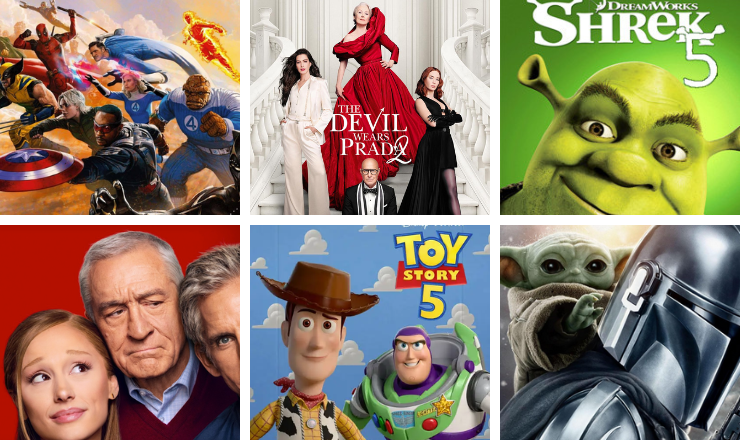
Pop culture in 2026 is suffering from a massive déjà vu. Analog has reigned supreme once again, especially among Gen Zs who have not experienced much of the tangible relics of the 90s, like cassette tapes and movie VCDs. While this nostalgia fever is strategically aimed at the deeper pockets of Millennials and Gen X, the reunion cycle isn’t new; we saw it decades ago when Boomers fueled the world tour revivals of the early 2000s.
As a mid-millennial pop culture obsessive, I’m usually the first to succumb to this whole nostalgia fever. It reminds me of my carefree days, my crazy grade school life in Y2K fashion. Seeing my favorite band members reunite or “dead” franchises finally crawl out of development hell is, on the surface, “delightful.”
However, in 2026, I am quite repulsed by the big studios” excessive inclination towards bringing back popular movies or “guaranteed” box office hits.
I receive countless movie and music press releases on a daily basis, and I noticed a pattern: most of the biggest studio films are part of a popular franchise: either prequels, sequels, reboots, or continuations of people’s favorite movies. I asked Google for the complete list of Hollywood films coming out in 2026, and I was revolted. I know it’s the second quarter of the year, but I write this article with a sense of concern about what’s happening to the big studios and their aversion to risk, most especially their underestimation of people’s tastes, their penchant for novelty, and what they choose to pay for.
Read more: Milly Alcock’s Supergirl: Why This Isn’t the DC Hero You’re Used To
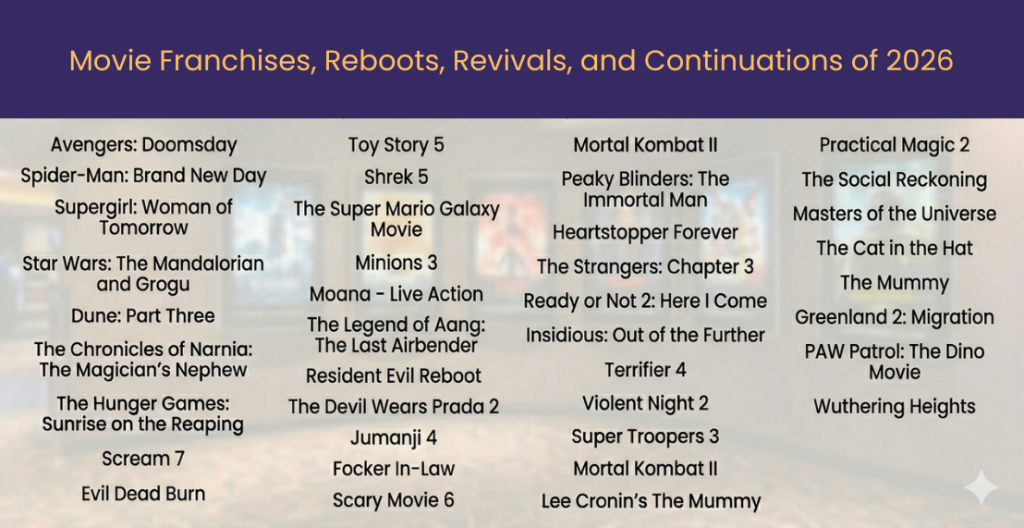
Here is the list of the movies from franchises, reboots, revivals, and continuations that are coming out again this year:
Read More: The Circle of Trust Just Got Bigger: Everything We Know About Focker-In-Law
I’ll give you a minute or two to digest that list. Isn’t it concerning? And to clarify, I’m not even sure if I’ve included every film franchise or remake on there. I might have overlooked some movies. At this point, I am a bit cynical about the future of cinema.
While I adamantly object to this trend, I honestly feel conflicted. Deep down, there’s a part of me, like a child, that wants to revisit many of these franchises. Hence, I have decided to react to some of them, and categorize them into those that can be forgiven and those that are unnecessary. I also want my biases to be acknowledged, especially since some of them are continuations of known franchises that have been talked about for years.
My biased take on movies that deserve a comeback
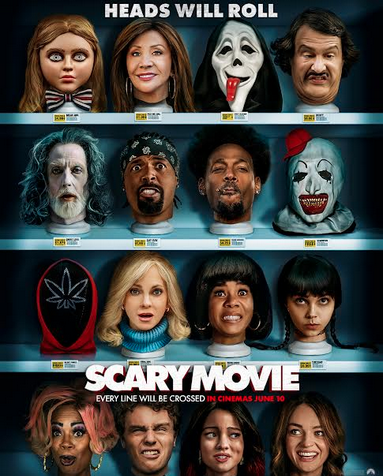
For 2026 nostalgia, I believe that movies like The Devil Wears Prada 2 and Practical Magic 2 deserve a comeback, given that they won’t destroy their franchise. The Scary Movie franchise is known as a parody, and people looked forward to it in the 2000s. I will watch Scary Movie 6 not just for nostalgia’s sake, but for my own curiosity about whether millennials and Gen-Z would be offended by the jokes or if the production and the Wayan brothers would care about deliberately being offensive. The film is set to spoof Megan, Sinners, Weapons, Get Out, Wednesday The Series, Everything Everywhere All At Once, among others.
I believe Minions 3 is also a great idea because I really love the minions, but perhaps instead of releasing a film, they can actually produce a cartoon series about them.
The events that occurred in Spider-Man: No Way Home were too intense, and people want an explanation and a sequel for it. I also understand that the Star Wars universe has a huge fanbase, so it’s inevitable for the franchise to continue in film.
Read more: Why “Spider-Man: Brand New Day” is the Fresh Start We Need
Like Peaky Blinders: The Immortal Man and Heartstopper Forever, movies born from series are mostly produced due to a clamor of its fans. I understand it very much and I think that fans deserve a treat from their favorite series that they surely miss.
As for the rest in the list, even though I’m a fan of them, like Toy Story, and Shrek, I can’t help but ask: aren’t there any more animation ideas? I’m sure a lot of artists are already conceptualizing great and marketable concepts now that only need support and budget. It’s the same as the other live action films on the list.
The Era of Algorithms and how the studios choose which films to produce
At first, I thought if this is some kind of Black Mirror thing, and maybe it is. So let’s get serious in this article.
In an era of algorithms, this isn’t shocking, but it is very disappointing. So at least in most, if not all, social media platforms, the algorithm favors what people like and consume on a daily or hourly basis. And now the big studios have started to adopt Algorithmic Cinema to minimize risk, which results in the “safe” list of 2026 sequels that I compiled.
An article by Critical Playground states: “Algorithmic cinema refers to the use of computational processes—ranging from machine learning models to procedural systems—to structure, generate, or adapt moving image narratives. It is not simply about digital special effects or editing software; instead, the algorithm itself becomes a narrative engine. In practice, this could mean a film that reorders its scenes based on audience input, a generative system that creates endless variations of a story, or an AI-driven director that assembles footage dynamically.”
My whole analysis of algorithmic cinema that relates to this year of sequels is that the big studios are not trusting a producer’s gut feeling anymore. They are now using computational processes to ensure that films they produce would be surefire hits. As a person who worked in the tech industry, I’m familiar with how technology like automation or algorithmic data can improve any huge company’s processes (like in Logistics and Warehousing). However, in the case of films, which is more of a creative, talent, and intuition industry, you cannot treat cinema like a database to be mined.
Scripts are based on imagination, intuition, novelty, and while you may somehow rely on data analytics to know how many people liked or prefer that kind of movie, there’s a downside to it. What Hollywood is doing now is that they are treating filmmakers as system designers. The problem with this algorithmic approach is that it can’t predict novelty, or the type of movies that people would be curious about in the future.
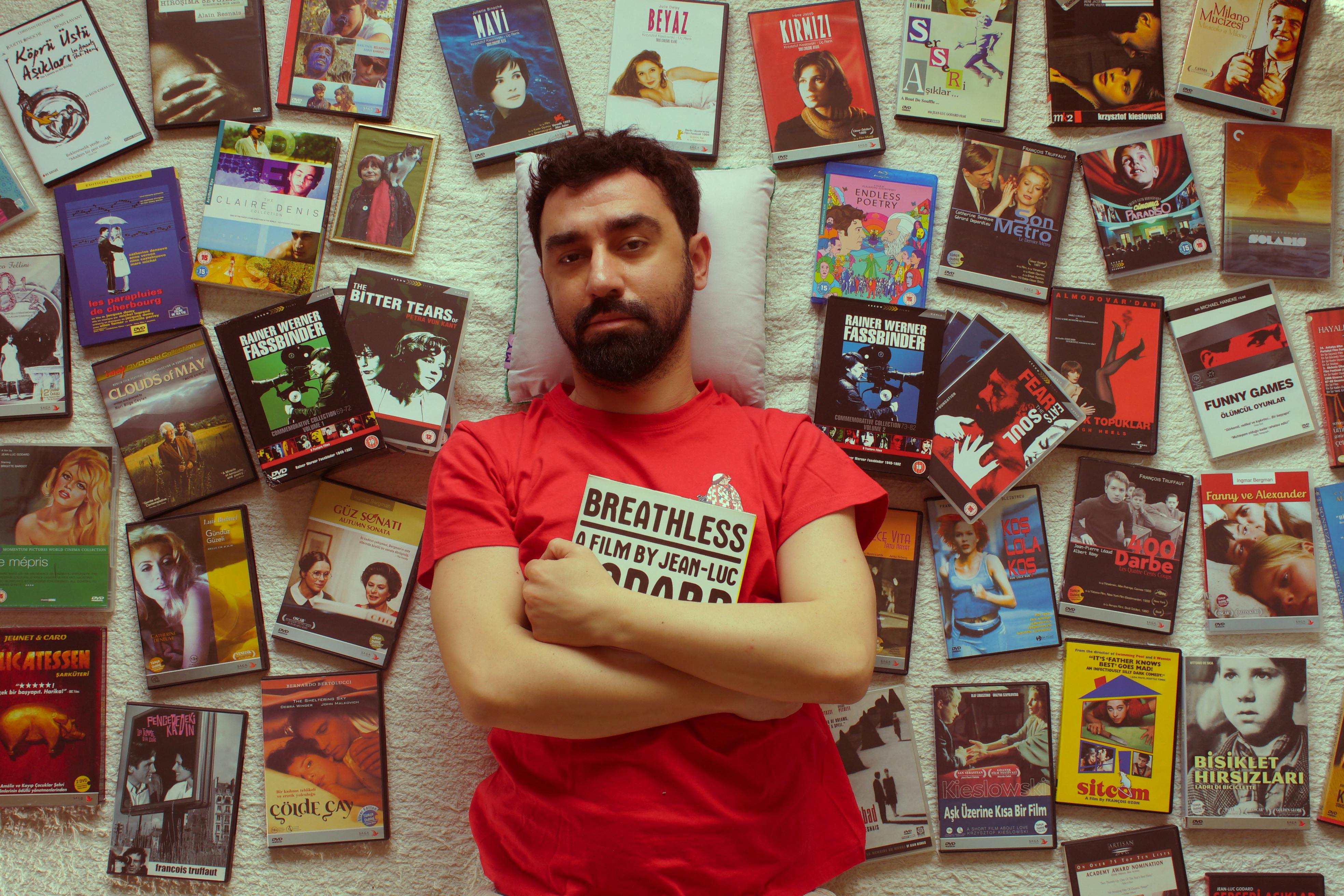
There’s a lot to decipher in data mining in social media, and it is paradoxical in so many ways. This isn’t just about entertainment preference, but more seriously, about our cognitive well-being.
It’s already an established fact that social media doom scrolling results in brain rot. But a recent study by University of California Santa Barbara researchers, Jonathan Schooler and Madeleine Gross, suggests that watching art or experimental films can actually trigger “conceptual expansion,” a cognitive state that makes our thinking more fluid and open to unconventional ideas. Essentially, engaging with immersive, aesthetic cinema acts as a mental workout that temporarily boosts our ability to think creatively.
The study insists that while the tech industry focuses on the efficiency and cost-effectiveness of algorithmic cinema, there will be a trade-off in the future, as a demand for art and novelty films spikes. A body of research about brain deterioration and early dementia are paving the way for solutions, and creating new experiences like watching art films address this need effectively. That’s where capitalism draws the line. As a tech creative, I would ask the big studios: Is your aversion to risk and resolute trust in the algorithm, a trust that’ll make you “win” more in sales, worth the price of a future where human imagination and creativity would cease to exist? Or would you prefer that an indie studio crushes you completely because of their originality and authenticity, which you utterly lack?
In the past five years, all these movie reboots saw no objections from their fans, so the studios took it another notch this year. The lack of variety is so tedious that I’ve been encouraging people to embrace indie cinema on my TikTok page. And I’m glad that Schooler and Gross’s study has proven that it could eliminate boredom and even make us smarter and creative.
While the big studios use algorithms to narrow our cultural expression into a loop of endless prequels, the future of human creativity relies heavily on the “indies.” At this point, we really need a lot of filmmakers who aren’t succumbing to this tech-heavy profit algorithm, but creators who offer unique, non-formulaic experiences that a computer can never suggest.
Again, as I’ve mentioned, this is a black mirror thing, so please, let’s shift it and watch what we like, but be more open to experimentation once in a while.
References and Sources:
- Bero ,T. (2026, February 17). Analog is back, and my millennial heart couldn’t be happier. The Guardian. https://www.theguardian.com/commentisfree/2026/feb/17/analog-is-back-and-my-millennial-heart-couldnt-be-happier
- Fenglr, W. and Bowles, M. (2025, September 22). How Gen X is leading the world in consumer spending. World Economic Forum. https://www.weforum.org/stories/2025/09/generation-x-world-consumer-spending/
- Maxson, C. (2026, January 27). Have You Seen It Yet? The Algorithm Problem In Movie Marketing. Tr!ll Magazine. https://www.trillmag.com/entertainment/tv-film/have-you-seen-it-yet-the-algorithm-problem-in-movie-marketing/
- Algorithmic Cinema and the Future of Narrative (2025, August 22). Critical Playground Magazine. https://criticalplayground.org/algorithmic-cinema-and-the-future-of-narrative/
- Gross, M. and Schooler, J. (2026)
Expanding minds: Artistic film promotes conceptual expansion and verbal creativity. APA PsychNet. https://psycnet.apa.org/doiLanding?doi=10.1037%2Faca0000852

NeP-C Ledesma is a millennial writer and entrepreneur full of curiosity about our abstract world. She devours Psychology, food, Philosophy, and prefer cats as her all-time company. Pop Culture is her kryptonite.