
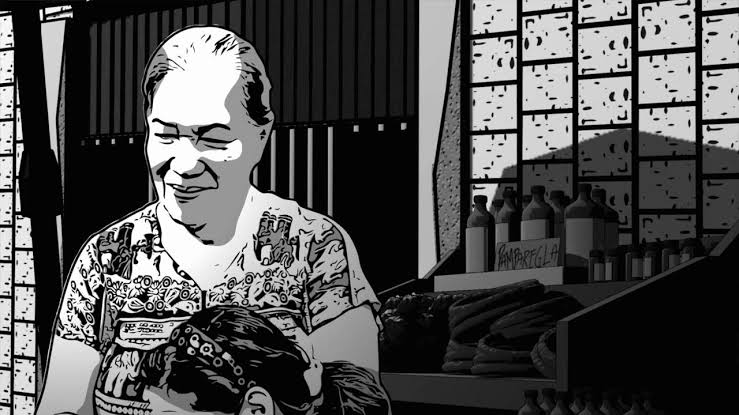
Carl Joseph Papa’s animated masterpiece ‘Manang Biring’ remains one of the most moving and distinctive films in modern Philippine cinema. Following the recent passing of veteran actress Erlinda Villalobos, who brought the title character to life, revisiting the film feels more meaningful than ever.
Having been deeply moved by the film on my first viewing, I remember bringing my mother to a Mother’s Day screening at the Cinematheque Centre Manila. I also recommended it to friends and added it to my list of films to watch on Mother’s Day and Christmas. With its portrayal of quiet sacrifices, absurd humor, and enduring warmth, ‘Manang Biring’ captures so much of what defines the Filipino family.
A Story of Sacrifice and a Mother’s Love
At its heart, ‘Manang Biring’ is a story that is as heartbreaking as it is funny. Biring (Erlinda Villalobos) is an elderly woman battling terminal cancer. With only a short time left to live, she receives a letter from her estranged daughter, Nita (Cherry Pie Picache), who lives in the United States and promises to come home for Christmas.
Refusing to let death rob her of one last holiday with her daughter, Biring makes a stubborn, desperate vow to survive until December 25. But staying alive comes at a cost she can barely afford. This leads Biring and her close-knit circle of friends into a series of comic, increasingly desperate schemes to pay for her medical treatments and prepare for Christmas.
What makes the narrative so compelling is its refusal to give in entirely to grief. The film moves effortlessly between tragedy and comedy, finding humor even in the face of suffering. Biring’s closest friends, played with warmth and charm by Mailes Kanapi and Alchris Galura, provide much of the film’s energy. Whether they are cooking up ill-conceived plans or exchanging dry, affectionate remarks, the two actors create a sense of friendship that feels genuine and familiar.
As the story draws to a close, ‘Manang Biring’ delivers an emotional payoff that is both tender and unforgettable. Without revealing its bittersweet ending, the film gradually shifts from a race against time to a poignant reflection on finding fulfillment in the face of death.
Artistic Excellence and Accolades
‘Manang Biring’ holds a special place in local film history. As an entry to the 2015 Cinema One Originals Film Festival, it made history by becoming the first fully animated feature to compete and win Best Film.
Director Carl Joseph Papa employed rotoscoping, an animation technique in which artists trace over live-action footage frame by frame. Presented in black and white, ‘Manang Biring’ transforms familiar everyday settings into striking, dreamlike scenes. Rather than making the film feel lifeless, its monochrome style draws attention to the characters’ emotions and struggles. This distinctive visual approach is complemented by Dinno Parafina’s evocative score, which deepens the film’s emotional impact.
The Legacy of Erlinda Villalobos
While the rotoscoped animation is a visual triumph, the true soul of ‘Manang Biring’ lies in Erlinda Villalobos’s performance. She provides the emotional center that makes Biring feel so real. Villalobos captures the character’s exhaustion, sharp wit, stubborn determination, and fierce love for her daughter. She portrays a mother who refuses to surrender, even when time is running out.
Beyond her iconic role as Biring, Villalobos brought her understated and natural acting style to other works in independent cinema, including short films such as Glenn Barit’s ‘Nangungupahan’ and Kevin Ang’s ‘Lola.’ Fittingly, her final screen appearance brought her full circle in Carl Joseph Papa’s ‘Patay Gutom’ for the Puregold Cinepanalo 2026 film festival.
With her passing, ‘Manang Biring’ stands as a monument to her craft, a reminder of the power of truthful performance in an industry that often overlooks seasoned character actors.
As we revisit ‘Manang Biring’ today, we honor both a cinematic landmark and the remarkable actress who gave it its heart. The film remains a timeless tribute to mothers, a perfect recommendation for the holidays, and a masterclass in Filipino storytelling that continues to make audiences laugh and cry.

Daniel is an avid lover of music and films. While most people his age would spend their leisure time playing online games, he enjoys creating playlists and movie lists. Daniel has also written opinion pieces for various publications. He studied Political Science at Adamson University and is currently an associate at the Depository Trust & Clearing Corporation. He would never say no to a cold beer!