
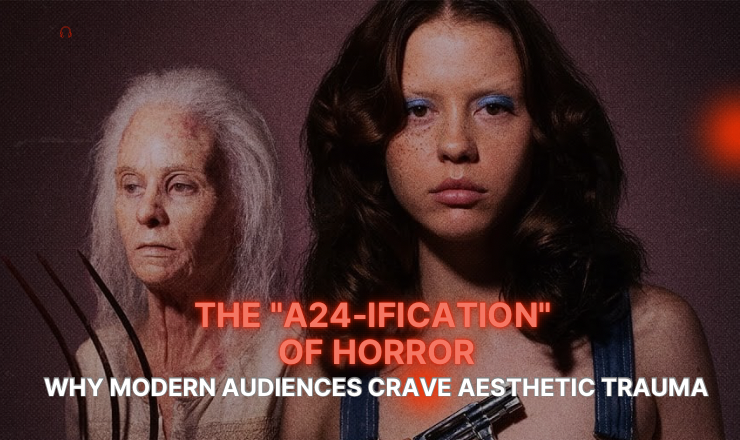
For decades, the horror genre was defined by the “slasher” and the “spectacle.” From the masked killers of the 1980s to the “torture porn” era of the early 2000s, the goal was simple: make the audience jump, scream, or gag. But over the last decade, a seismic shift has occurred. Led by the meteoric rise of the independent studio A24, a new sub-genre has seized the cultural zeitgeist.
Critics call it “elevated horror.” Fans call it “aesthetic trauma.” Whatever the label, the landscape of fear has changed from external monsters to internal breakdowns.
The Rise of the “Vibe”
To understand the “A24-ification” of horror, one must look at the visual language of films like Hereditary, Midsommar, and The Witch. These aren’t just movies; they are curated experiences. Gone are the grainy, handheld cameras and the reliance on darkness. In their place, we find symmetrical cinematography, muted color palettes, and—interestingly—plenty of bright, unforgiving sunlight.
This shift prioritizes atmosphere over action. In the A24 model, the “scare” isn’t a clown jumping out of a sewer; it’s a wide-angle shot of a character’s face as they realize their grief has become a sentient, suffocating thing. It is horror that invites you to lean in rather than recoil, pulling you into a meticulously crafted world where the dread is baked into the wallpaper.
From Monsters to Mental Health
The defining characteristic of this era is the transition of the “villain.” In classic horror, the threat is “The Other”—the vampire, the alien, the masked stranger. In the modern “elevated” landscape, the threat is The Self.
Modern horror serves as a Trojan Horse for heavy themes:
• Grief: Hereditary isn’t really about a cult; it’s a family’s disintegration after a traumatic loss.
• Isolation: The Lighthouse explores the madness of the masculine ego.
• Relationship Toxicity: Midsommar is arguably the world’s most expensive and violent “break-up movie.”
Audiences in 2026 are increasingly drawn to these narratives because they reflect a collective societal anxiety. In a world of global instability and digital burnout, the idea that the “monster” is actually our own unaddressed trauma feels more grounded and terrifying than a supernatural boogeyman.
The Backlash: Is it Too Pretentious?
As with any trend, the “A24-ification” of the genre has met resistance. A growing segment of the horror community argues that “elevated horror” is a term rooted in elitism. By labeling certain films as “elevated,” there is an implicit suggestion that “slasher” or “creature features” are “low-brow.”
Critics of the movement argue that the focus on aesthetics often comes at the expense of pacing. We’ve all sat through a “slow-burn” horror film that felt more like a “slow-simmer-that-never-actually-boils.” When a movie spends 90 minutes on beautiful cinematography and symbolism but forgets to actually be scary, does it still qualify as horror?
Furthermore, the “aesthetic trauma” trend has led to a formulaic approach within indie cinema. We are now seeing “A24 clones”—films that use the same color grading and the same “disturbed protagonist” tropes to signal to the audience that they are “important” films. This creates a new kind of predictability, the very thing the movement was supposed to kill.
Why We Can’t Look Away
Despite the critiques, the commercial and awards-season success of these films proves that the “A24-ification” of horror is here to stay. It has fundamentally changed what we expect from a theater experience. We no longer just want to be scared; we want to be haunted. We want to leave the theater and spend three hours on Reddit reading theories about what the final frame actually meant.
This “intellectualization of fear” has turned horror fans into detectives. It has made the genre respectable in the eyes of the Academy and has given a platform to visionary directors like Robert Eggers and Ari Aster.
A Genre Reborn
The A24 influence hasn’t killed the traditional horror movie—Scream and Smile sequels still dominate the box office—but it has expanded the boundaries of what horror is allowed to be. It has proven that trauma, when dressed in beautiful cinematography and haunting scores, is the most potent monster of all.
As we move further into 2026, the question isn’t whether horror will remain “elevated,” but how it will evolve next. Will we return to the fun, campy slashers of the past as an escape from the “aesthetic trauma,” or is our appetite for beautiful misery insatiable?
RJ Tantoco is a writer and researcher with a passion for all things strange, geeky, and genre-bending. Whether it’s horror slashers, offbeat indie gems, or the latest multiverse mind-bender, RJ dives deep. His writing blends fandom with sharp analysis, offering fresh takes on cult favorites and cinematic oddities alike. When he’s not watching movies, he’s probably studying for his masters or deep on an RPG quest.