
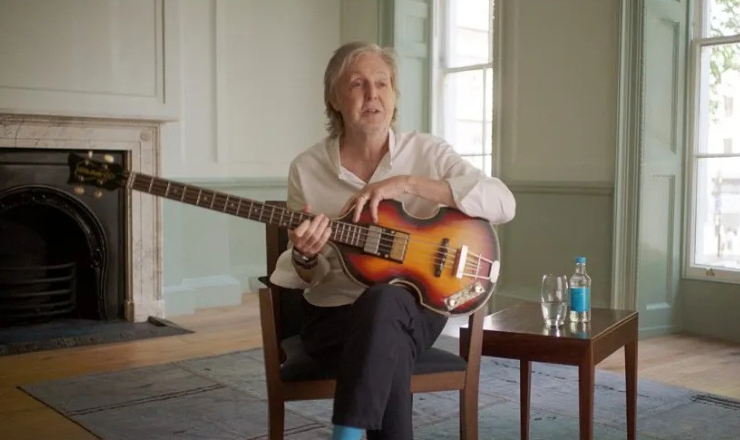
In a tale that intertwines rock ‘n’ roll legend with the thrill of a decades-long mystery, the extraordinary story of Paul McCartney’s stolen Höfner bass guitar, missing for 51 years before its triumphant return in 2024, will be brought to life in a captivating new feature-length documentary titled The Beatle and the Bass. Directed by Arthur Cary, known for his poignant works Surviving 9/11 and The Last Survivors, this film promises to unravel one of music history’s most enduring enigmas. Produced by the BAFTA-winning Passion Pictures, the team behind the acclaimed Super/Man: The Christopher Reeve Story, the documentary is set to air as part of BBC Arts’ prestigious Arena series, celebrating its 50th anniversary in 2025. With Fremantle handling global distribution, The Beatle and the Bass is poised to captivate audiences worldwide, from Liverpool to Los Angeles, offering a heartfelt exploration of music, memory, and the relentless pursuit of a cherished artifact.
The saga begins in 1961, when an 18-year-old Paul McCartney, then an unknown musician, purchased his Höfner bass guitar for a modest £30 in Hamburg, Germany. This violin-shaped instrument, with its warm, distinctive tone, became a cornerstone of the Beatles’ early sound, accompanying McCartney through the band’s meteoric rise from smoky Hamburg clubs to global stardom. It was by his side during iconic performances and recordings that defined a generation, from the Cavern Club to Please Please Me. But in the early 1970s, the bass vanished under mysterious circumstances, leaving McCartney and fans heartbroken, convinced it was lost forever to the annals of rock history. “I think anything that’s nicked, you want back, especially if it has sentimental value,” McCartney reflects in the documentary, his voice tinged with nostalgia. “It just went off into the universe and it left us thinking, where did it go? There must be an answer…”
The Beatle and the Bass transforms this loss into a gripping detective story, chronicling the global quest to recover the iconic instrument. The documentary features intimate interviews with McCartney himself, offering a rare glimpse into his personal connection to the bass and its significance in his life. Joining him are key figures from his inner circle, including his brother, Mike McCartney, who shares memories of the Beatles’ formative years; Klaus Voormann, a close friend and artist who witnessed the band’s early days in Hamburg; and collaborators like Elvis Costello, whose own musical journey intersects with McCartney’s legacy. The film also spotlights the dedicated fans, experts, and journalists behind The Lost Bass Project, a grassroots initiative launched in 2018 that tirelessly pursued leads across continents to rescue and restore the stolen instrument. Their efforts culminated in 2024, when the bass was miraculously recovered, sparking global headlines and rekindling a piece of Beatles history.
The documentary’s narrative weaves together threads of music, nostalgia, and human connection, capturing the emotional weight of the bass’s disappearance and triumphant return. “From its beginnings, we knew The Beatle and the Bass was exactly the kind of distinctive, emotional, and uplifting story that we love to tell,” says Emily Jeal, Passion Pictures’ head of feature documentaries. Directed by Cary, whose ability to craft compelling human stories shines in works like The Last Survivors, the film balances the thrill of a mystery with the heartfelt resonance of McCartney’s journey. Produced in association with Footprint Media Partnership, with Jeal and Hamish Fergusson as executive producers and Scott Jones and Naomi Jones as associate producers, the project reflects Passion Pictures’ commitment to storytelling that resonates on a global scale.
Announced as part of BBC Arena’s 50th anniversary, alongside other notable projects like Turner: The Secret Sketchbooks and LS Lowry’s Lost Tapes (both also produced by Passion Pictures), The Beatle and the Bass stands out for its universal appeal. The Arena series, a cornerstone of BBC Arts, has long championed innovative storytelling, and this documentary fits seamlessly into its legacy. Fremantle’s VP of non-scripted acquisitions, Ceire Clark, emphasizes the project’s global reach: “This remarkable story takes us on a truly global journey, spanning decades and continents.” She adds, “The documentary offers a fresh perspective on music history, with access to McCartney himself and those who witnessed the Beatles’ rise from the very beginning.” Fremantle’s role in distributing the film ensures that audiences from London to Tokyo can experience this tale of loss and rediscovery, celebrating the enduring power of music to connect people across time and space.
The Höfner bass, with its iconic violin shape, is more than an instrument—it’s a symbol of the Beatles’ cultural revolution. Purchased during the band’s gritty Hamburg days, it was a constant presence as they transformed from a local act to global icons, influencing generations of musicians and fans. Its disappearance in the early 1970s, possibly during a film shoot or tour, sparked countless theories, from theft by a fan to misplacement in a studio. The Lost Bass Project, led by Höfner enthusiast Scott Jones and journalists like Naomi Jones, turned speculation into action, scouring auction records, music forums, and even attics to track down leads. Their persistence paid off when the bass was found in a Sussex attic in 2024, authenticated by Höfner and returned to McCartney in a moment of triumph that resonated with fans worldwide.
This documentary arrives at a time when McCartney’s legacy is being celebrated anew. Alongside The Beatle and the Bass, Morgan Neville’s Man on the Run, premiered at Telluride in 2024 and streaming on Amazon Prime Video, explores McCartney’s post-Beatles career with Wings and his solo endeavors. Together, these films offer a multifaceted portrait of a music legend whose influence spans over six decades. The Beatle and the Bass stands out for its focus on a single, deeply personal artifact, weaving a narrative that’s as much about human connection as it is about rock history. For Indian audiences, where the Beatles’ music has a devoted following, the documentary taps into a universal love for the band, with streaming platforms like BBC iPlayer and potential Indian distributors ensuring accessibility.
The film’s SEO-friendly appeal lies in its blend of nostalgia, mystery, and star power, with keywords like “Paul McCartney,” “Höfner bass,” “Beatles documentary,” and “The Lost Bass Project” likely to draw search traffic from music fans and historians alike. Its global journey—from Hamburg’s Reeperbahn to a Sussex attic—resonates with audiences in music hubs like London, New York, and Mumbai, where the Beatles’ legacy remains strong. By highlighting personal stories, from McCartney’s reflections to Voormann’s memories of Hamburg’s Star-Club, the documentary captures the human side of a global phenomenon, making it relatable to viewers of all ages.
As The Beatle and the Bass prepares to hit screens, it promises to be a love letter to the Beatles’ enduring legacy and a testament to the power of perseverance. For fans who’ve followed McCartney’s journey from Liverpool to the world stage, the film offers a chance to relive a piece of history, while newcomers will discover the magic of a band that changed music forever. With Passion Pictures’ storytelling expertise and BBC Arena’s prestigious platform, this documentary is set to strike a chord, reminding us that even a stolen bass guitar can carry the weight of a generation’s dreams.

The Pop Blog general news and updates, mostly from press releases and conferences.