
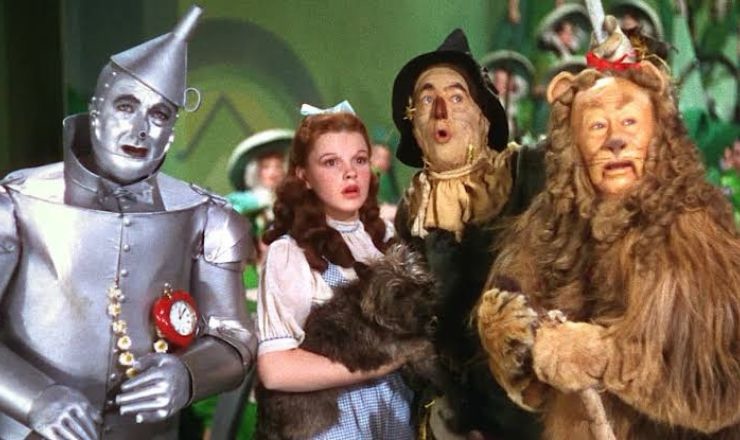
“You’re in the tornado, man.” That blunt assurance comes from Paul Freeman, the principal audio artist at Sphere Studios, setting the stage for the radically immersive experience awaiting audiences when the enhanced 1939 classic “The Wizard of Oz” debuts at the Las Vegas Sphere on August 28th. This isn’t merely a louder soundtrack; it’s a complete sensory reinvention designed to place viewers directly inside MGM’s beloved fantasy. Freeman, laser-focused on the aural revolution, addresses the burning questions: How much of the iconic orchestral score was re-recorded? Does Judy Garland’s Dorothy still sound authentically like herself amidst the technological overhaul? And just how physically intense will the seat haptics get – is this a gentle update or a full-blown theme park ride?
“The tornado is our opportunity to do something outrageously outrageous,” Freeman declares with palpable excitement. “We’ve replicated every conceivable frequency at different proximities within the storm. When it’s bearing down, just 13 feet from Dorothy desperately trying to secure her farmhouse door? ‘Hold onto your dentures,’ I tell people. It’s gnarly in a big way.” He reveals a core sonic secret: “The tornado’s fundamental roar? It originates from a human scream, massively transformed. You don’t consciously register it as a voice, but it provides that primal, terrifying core.” The immersion shifts dynamically: “Inside the house, hiding with Toto, it’s a totally different soundscape – rattling timbers, howling wind pressure, the very structure groaning around you.” Subtlety plays an equally crucial role. Freeman details the hidden Wizard’s booming voice: “We developed specialized software synthesis to generate ultra-low frequencies mimicking his vocal tonality, vibrating the seats in precise sympathy with his speech patterns. It’s designed to make you feel the Cowardly Lion’s visceral fear. This isn’t just Sensurround rumble; the haptics physically embody how he’s speaking.”
Balancing these visceral thrills with the film’s inherent warmth and musicality was paramount. “We agonized,” Freeman admits. “Would modernizing the vocal recordings irritate the ‘Wizard of Oz’ purists? And I count myself among them – this film is deeply ingrained in me, professionally and personally [he worked on ‘Wicked’]. But experiencing it within Sphere… it’s a beautiful, seamless melding of what you expect from this cherished film and what you expect from this revolutionary venue. That’s not a sales pitch; it’s the result.”
Carolyn Blackwood, Head of Sphere Studios (which licensed the film from Warner Bros.), firmly believes “Oz” is uniquely suited among vintage classics for this high-tech rebirth, citing its inherent variety and groundbreaking legacy. “Sphere is Jim Dolan’s vision for fully experiential, immersive entertainment – a massive media plane enveloping you,” Blackwood tells Variety. “For licensed content leveraging our technological advances, including AI, what better starting point than ‘Wizard of Oz’? Firstly, its iconic status spans generations 8-to-80, offering built-in nostalgia. But crucially – and this is often overlooked – in its own time, ‘Oz’ was a radical technological leap, astonishing audiences with the transition from sepia Kansas into the vibrant dreamscape of Technicolor. It was both profoundly beloved and a pioneer. Sphere aims to recapture that dual spirit: honoring the heart while pushing boundaries.”
Visually, AI plays a significant role. “Where the original had a tight closeup on Dorothy, but the script placed the Tin Man, Scarecrow, and Cowardly Lion beside her,” Blackwood explains, “we’ve now generated wider shots placing them all convincingly within the frame together.” The venue’s towering dome promises spectacle: while mindful of audience necks, flying monkeys seem destined for vertical flight paths. “Can you imagine?” Blackwood smiles, hinting without confirming. “We intend to make full, dynamic use of that canvas.”
The Sonic Overhaul: Precision and Preservation
Freeman delves deeper into the audio complexities, the focus of this week’s announcements. The core challenge? “Blending modern, spatialized orchestral recordings made specifically for Sphere, the original 1939 optical dialogue tracks (inherently limited), and our sophisticated infrasound seat systems into a cohesive, holistic, immersive experience – all while safeguarding the original film’s character and emotional resonance. It’s been outrageously fun, outrageously complex.”
Key Audio Transformations:
- The Entirely New Orchestra: Not a note of the original Herbert Stothart score remains in the mix. An 80-piece orchestra, conducted by renowned film scoring maestro David Newman, was meticulously re-recorded on Stage 1 at the historic former MGM (now Sony) lot – the very soundstage where the 1939 score was captured. To achieve unprecedented spatial precision for Sphere’s unique environment, the recording was painstakingly broken down. “We recorded stems in 7.7.1 multi-channel format,” Freeman details. “We’d isolate sections – short strings vs. long strings, short brass vs. long brass, woodwinds similarly split – based on how widely we could position them sonically before the Sphere’s acoustics caused phase issues at the edges. Each section recorded to the existing guide tracks, listening intently to what was already laid down to ensure the ebb, flow, vibrato, and mute choices matched the 1939 performance style exactly.” The result, Freeman insists, defies its piecemeal origin: “It sounds utterly unified, vibrant, and present, like the orchestra is live in the Sphere with you. It’s seriously beautiful.”
- Sacred Vocals: Judy Untouched: This was non-negotiable. “We had deep discussions early on,” Freeman recounts. “Should we emulate Dorothy by processing Judy’s voice through a high-end modern mic to sit ‘better’ with the new orchestra? The moment we heard the test, the debate ended. It needs to be what it is.” Blackwood is unequivocal: “People speculated about AI altering the vocals due to our visual work. We did not. This is Judy Garland.” Original quirks remain: Auntie Em’s harmonic distortion, the Wicked Witch’s deliberately harsh timbre. “Fixing them sounds wrong,” Freeman states. “You know how it should sound.” Only the Munchkins received spatial tweaks: “Their vocals can be sonically challenging. We repositioned them immersively within the Sphere – making it feel like you’re standing among them – which alleviated the irritation without altering a single note they sang.”
- Rebuilt Soundscape: Original production sound effects are sparse and largely replaced. “We’ve built a robust, positionally accurate sonic world,” Freeman says. Footsteps, creaks, environmental sounds – all are new and precisely placed to match the on-screen action within the 160,000 sq ft dome.
- Thematic Haptics (Infrasound Seats): Moving far beyond simple rumbles, the haptics are used as nuanced storytelling tools. “Glinda’s arrival features that signature harp arpeggio,” Freeman describes. “I send a corresponding, very subtle high-frequency tone to the seats with each heartbeat note – you feel it as much as hear it, enhancing her ethereal presence.” The Wicked Witch employs a “backwards reverb” effect in the seats, mirroring her malevolent aura. “It’s incredibly subtle, character-specific, not overt.” Blackwood recounts a test: “We muted all sound except the haptics, playing dozens of thematically designed moments Paul mapped. The impact was fascinating – a subconscious, emotional resonance akin to a musical score.” (Note: Only the 10,000 optimally positioned seats with haptics are sold for the show).
Pushing the Sphere’s Limits: Math and Magic
Freeman highlights creative audio applications: “When the Tin Man sways, parts of the strings ascend and descend musically. I can now pan those specific string elements perfectly in sync with his movement across the vast Sphere canvas, while the core orchestra remains anchored. It’s a disorienting, delightful effect – you’ve never heard the Tin Man like this.” And the tornado? “We’re dynamically moving musical themes – like Margaret Hamilton’s witch motif as she transforms during the cyclone spin – spatially with the visuals, creating a truly dizzying vortex of sound.”
Sphere’s spherical shape presents unique acoustic challenges. “It demands more math than Einstein might conceive,” Freeman laughs. Ensuring consistent sound for all 18,000 seats requires meticulous spatial planning to avoid audio collapse at the periphery, especially critical when deploying wide orchestral elements. The solution involved the strategic splitting of orchestral sections based on note duration for optimal dispersion.
Despite the technological fireworks, Freeman makes the boldest promise: “We’re not doing anything in this film that would take you out of the moment or betray the original’s spirit.” The goal is emotional authenticity amplified by immersion. Whether floating over the rainbow with Judy or fleeing winged monkeys, audiences are advised: hold onto your dentures, and your little dog too. The yellow brick road has never sounded – or felt – like this.
The story was first featured on Variety.

With a lifelong passion for storytelling and a particular focus on the diverse cultures of Asia and the ASEAN region, Monica delves beyond the surface of films and music. She seeks out the productions that spark conversations, challenge perspectives, and offer profound insights into the human condition. She’ll guide you through the societal commentaries and the sheer brilliance of performances that make the Asian and ASEAN landscape so compelling.