
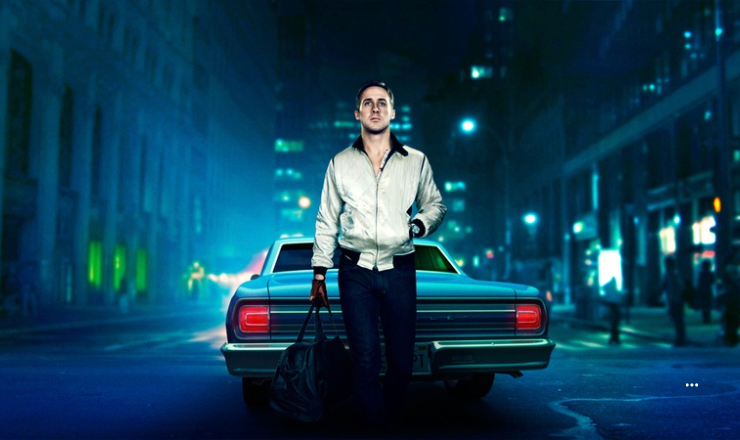
The city is perpetually damp, reflecting a kaleidoscope of pink, cyan, and amber light. Shadows aren’t just dark; they are velvet voids where lonely protagonists in iconic jackets lean against retro-futuristic cars. Whether you are scrolling through a “slowed + reverb” playlist on YouTube, browsing a Parisian streetwear lookbook, or watching a high-budget music video from Seoul, you are likely standing in the shadow of a very specific cinematic titan: Neon-Noir.
While the original Film Noir of the 1940s was defined by the black-and-white grit of post-war anxiety, the Neon-Noir Renaissance—spearheaded by masterpieces like Ridley Scott’s Blade Runner and revitalized by Nicolas Winding Refn’s Drive—has become the definitive visual language of the 21st century.
But why does a style born from 1980s pessimism still hold such a vice-grip on our collective global imagination in 2026?
The Genesis: When Grime Met Glow
To understand the present, we have to look at the rain-slicked streets of 1982 Los Angeles. When Ridley Scott released Blade Runner, he didn’t just make a sci-fi movie; he built a world that felt lived-in, decaying, and hauntingly beautiful.
Unlike the sterile, white-walled futures of Star Trek, Blade Runner introduced “tech-noir.” It took the tropes of the hardboiled detective—the trench coat, the existential dread, the moral ambiguity—and bathed them in the flickering glow of massive LED billboards and neon kanji signs.
“I’ve seen things you people wouldn’t believe… All those moments will be lost in time, like tears in rain.” — Roy Batty, Blade Runner
The film asked a fundamental question: In a world saturated with artificial light and artificial people, what is real? This philosophical weight is what separates Neon-Noir from standard action cinema. It isn’t just about the colors; it’s about the crushing loneliness that those colors fail to hide.
The 2011 Pivot: The ‘Drive’ Effect
For a few decades, the aesthetic simmered in the underground. Then came 2011. Nicolas Winding Refn’s Drive took the world by storm, not with a complex plot, but with an overwhelming vibe.
By trading the rainy streets of a future L.A. for the sun-scorched, synth-heavy nights of modern Hollywood, Drive proved that Neon-Noir wasn’t just a sci-fi subgenre—it was a mood. Ryan Gosling’s unnamed Driver, with his satin scorpion jacket and stoic silence, became the new blueprint for the “Modern Loner.”
Drive stripped away the dialogue and let the soundtrack and lighting do the talking. It re-popularized the Synthwave movement, bringing 80s-inspired electronic music back into the mainstream. Suddenly, every bedroom producer and indie filmmaker from London to Tokyo wanted to capture that specific blend of violence and vulnerability under a magenta hue.
The Visual Anatomy of the Renaissance
What exactly makes a film “Neon-Noir”? It’s more than just a color palette. It’s a deliberate architectural and psychological choice that resonates across borders.
· The High-Contrast Palette: Neon-Noir leans heavily on complementary colors—specifically the “Teal and Orange” or “Cyan and Magenta” splits. These colors create a sense of artificiality that reflects the characters’ detachment from nature.
· Low–Key Lighting: Inspired by the chiaroscuro of classic Noir, Neon-Noir uses extreme shadows. However, instead of a single streetlamp, the light source is often a neon sign, a computer monitor, or the glowing dashboard of a car.
· The Urban Labyrinth: The setting is always a city that feels too big to navigate. Whether it’s the towering megalopolis of Denis Villeneuve’s Blade Runner 2049 or the claustrophobic alleys of Hong Kong in a Wong Kar-wai film, the environment is designed to make the individual feel small and replaceable.
· The Melancholic Soundtrack: You cannot have Neon-Noir without the “hum.” From Vangelis’s sweeping synthesizers to Cliff Martinez’s pulsating beats in Drive, the music acts as the heartbeat of the city—cold, mechanical, yet deeply emotional.
Why the Aesthetic Resonates Today
From the streets of New York to the tech hubs of Bangalore, the Neon-Noir aesthetic has moved beyond the cinema screen and into our lifestyle.
The Digital Isolation
We live in an era of unprecedented connectivity, yet global rates of loneliness are at an all-time high. The Neon-Noir protagonist is the ultimate avatar for the modern citizen. We see ourselves in Rick Deckard or K—individuals trying to find a human connection in a world dominated by algorithms and glowing screens.
The Retro-Futurism Craze
There is a profound international nostalgia for a future that never happened. Gen Z and Millennials gravitate toward the “Analog-Digital” hybrid of the 80s—the chunky buttons, the VHS glitches, and the physical neon tubes. It feels more “tactile” than our current world of sleek, invisible software.
The “Vibe” Economy
On platforms like TikTok and Instagram, “vibe” is currency. Neon-Noir is inherently photogenic. The high saturation and moody lighting make for perfect short-form content. This has led to a surge in “Cyberpunk” photography in global hubs like Shinjuku, Berlin, and Dubai, where the juxtaposition of luxury and grit creates a natural Neon-Noir canvas.
Key Films to Watch: The Neon-Noir Starter Pack
· Blade Runner (1982) – Directed by Ridley Scott: The blueprint. It defined the visual language of the future and the “tech-noir” genre.
· Fallen Angels (1995) – Directed by Wong Kar-wai: A sweaty, distorted, and gorgeous look at urban longing and the neon-soaked nights of Hong Kong.
· Drive (2011) – Directed by Nicolas Winding Refn: The film that made “synthwave” and “cool” synonymous again for a modern global audience.
· John Wick (2014) – Directed by Chad Stahelski: Proved that action choreography looks better in neon-soaked clubs and rain-slicked New York streets.
· Blade Runner 2049 (2017) – Directed by Denis Villeneuve: A masterclass in cinematography (by Roger Deakins) that expanded the lore for a new generation.
The Legacy of the Light
As we look toward the future of cinema, the influence of Neon-Noir isn’t fading—it’s evolving. We see its fingerprints in the crimson-soaked hallways of The Batman (2022) and the hyper-stylized world of Spider-Man: Across the Spider-Verse.
The Neon-Noir Renaissance persists because it mirrors our own global reality. We are all living in a world that is increasingly bright, increasingly loud, and increasingly digital. By watching these films, we find a strange comfort in the shadows. We realize that even in a city of ten million glowing lights, it’s okay to be a little bit lonely.
The neon sign may flicker, and the rain may never stop, but as long as there is a story to tell in the dark, the “Noir” will never die. It just gets a little more colorful.
RJ Tantoco is a writer and researcher with a passion for all things strange, geeky, and genre-bending. Whether it’s horror slashers, offbeat indie gems, or the latest multiverse mind-bender, RJ dives deep. His writing blends fandom with sharp analysis, offering fresh takes on cult favorites and cinematic oddities alike. When he’s not watching movies, he’s probably studying for his masters or deep on an RPG quest.